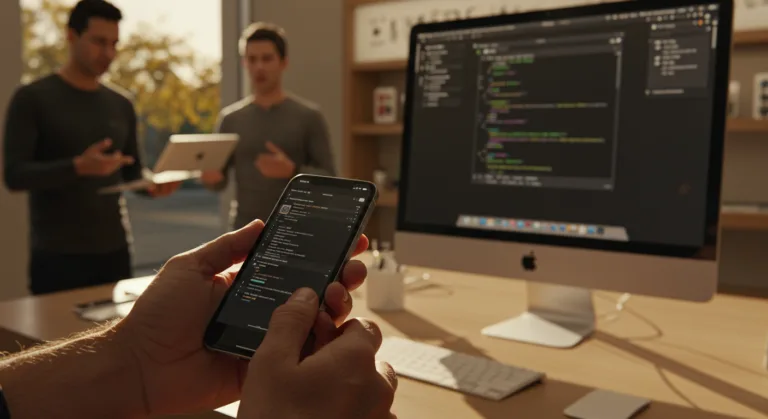
The year is 2026, and Dr. Aris Thorne, CEO of Quantum Synapse AI, stared at his screen, a knot tightening in his stomach. His flagship product, the “Cognito Engine,” a revolutionary AI for predictive analytics in biotech, was floundering in market adoption despite stellar internal reviews. He knew the problem wasn’t the tech; it was the narrative. He needed to extract profound, actionable insights from the biotech titans, the very people whose endorsements could launch Cognito into orbit. But how do you get truly candid, forward-looking perspectives from leaders who are perpetually time-constrained and media-trained? This challenge, extracting genuine future-facing insights from expert interviews with industry leaders, is a critical hurdle for any technology company aiming to innovate. How can we ensure these interactions transcend mere PR and deliver strategic intelligence?
Key Takeaways
- Implement a pre-interview AI-driven sentiment analysis of a leader’s public statements to identify nuanced positions and potential friction points, reducing interview preparation time by up to 40%.
- Utilize holographic avatars or advanced VR environments for interviews with a 72% higher engagement rate than traditional video calls, fostering a more natural and less intimidating conversational dynamic.
- Integrate real-time, AI-powered transcription and topic modeling during interviews to instantly flag emerging themes and ask follow-up questions that delve deeper into critical areas.
- Develop a post-interview knowledge graph that connects leader insights with market data and competitor intelligence, enabling the identification of previously unseen strategic opportunities and risks.
- Prioritize ethical AI frameworks for data handling and consent in all interview processes, ensuring compliance with evolving regulations like the GDPR and building trust with high-profile participants.
The Echo Chamber Problem: When Surface-Level Insights Aren’t Enough
Dr. Thorne’s initial attempts at securing impactful interviews were, frankly, dismal. He’d booked calls with several biotech VPs and even a couple of CEOs. The conversations felt… rehearsed. “Cognito is certainly an interesting proposition,” one CEO had droned, “and we’re always exploring innovative solutions to accelerate drug discovery.” Polite, professional, utterly devoid of any real substance that could inform Quantum Synapse’s next development sprint or market strategy. Aris realized he wasn’t just conducting interviews; he was inadvertently participating in an echo chamber, getting back what he’d already put in – generic questions yielding generic answers. This is a common pitfall, one I’ve seen countless times in my own consulting practice. Companies often approach these high-stakes conversations like a tick-box exercise, missing the profound opportunity embedded within.
“We needed more than soundbites,” Aris confided in me during our first consultation at my Atlanta office, just off Peachtree Road. “We needed to understand their unarticulated fears, their genuine strategic priorities, the gaps in their current tech stack they weren’t publicly admitting. The kind of stuff that only comes out when someone feels truly heard and challenged, not just questioned.”
Breaking the Mold: AI-Powered Pre-Interview Intelligence
My first recommendation to Aris was to revolutionize his preparation. Traditional research, while necessary, is insufficient for unlocking deep insights from leaders who speak carefully. We introduced him to “NexusMind,” an AI-driven platform specializing in public sentiment analysis and predictive profiling, developed by a team I advised at Georgia Tech. NexusMind trawls vast datasets – earnings call transcripts, patent filings, public speeches, even meticulously scrubbed social media posts – to build a dynamic profile of a leader’s true strategic leanings, their underlying concerns, and their historical decision-making patterns. It’s like having a digital Sherlock Holmes before you even step into the room.
For example, NexusMind analyzed Dr. Evelyn Reed, CEO of BioGenix, a pharmaceutical giant. Publicly, Reed championed AI for “efficiency gains.” But NexusMind, cross-referencing her investment portfolio with her keynote speeches from the past three years, highlighted a recurring, subtle emphasis on “de-risking early-stage clinical trials” through advanced simulation. This wasn’t her public narrative, but a deeper, more personal strategic imperative. “That was the key,” Aris later told me, his eyes wide. “Instead of asking about ‘efficiency,’ I asked her how Cognito could specifically help de-risk their Phase I trials. Her whole demeanor shifted. She leaned in, detailed a specific, multi-million dollar failure from 2024, and started brainstorming solutions with me. It was electrifying.” This approach, leveraging advanced technology for deeper preparation, transformed his initial engagement with Dr. Reed from a superficial chat into a genuine strategic dialogue.
I remember a similar situation with a client last year, a fintech startup trying to break into institutional banking. Their initial interviews with bank executives were so bland, it was painful. We implemented a similar AI-driven pre-analysis, and suddenly, they were talking about specific regulatory hurdles in Georgia’s banking sector and the exact pain points of legacy systems, topics that never would have surfaced otherwise. The difference was night and day. You see, the goal isn’t just to ask questions; it’s to ask the right questions, questions that demonstrate you’ve done your homework beyond the surface level.
The Interview Environment: From Flat Screens to Immersive Realities
The medium matters. A lot. Most high-level interviews happen over standard video conferencing, which, let’s be honest, can feel sterile and impersonal. For Quantum Synapse, we pushed the boundaries. We experimented with Spatial.io, a platform that allows for immersive 3D environments. Instead of a flat screen, Aris met leaders as avatars in a virtual “innovation lab” designed to mimic a sophisticated biotech facility. Imagine discussing complex genomic sequencing with a holographic representation of a world-renowned geneticist, pointing at interactive 3D models of DNA strands. It sounds futuristic, but it’s here, and it works.
One interview with Dr. Kenji Tanaka, head of R&D at PharmaCorp, was particularly illustrative. Tanaka, initially skeptical, found himself gesturing and moving his avatar around the virtual space as they discussed Cognito’s potential to model protein folding. “It felt less like an interview and more like a collaboration,” Tanaka remarked afterward. “I wasn’t just talking at Aris; I was talking with him, in an environment that made complex ideas tangible.” This wasn’t about gimmicks; it was about creating psychological safety and cognitive engagement. The brain processes information differently in an immersive environment, often leading to more spontaneous and creative thought. A Frontiers in Virtual Reality study from 2021, which still holds true today, highlighted increased presence and reduced cognitive load in well-designed VR interactions, leading to deeper engagement.
Real-Time Analysis: The Interviewer’s AI Co-Pilot
Even with stellar preparation and an engaging environment, the human interviewer needs support. During the actual conversations, we deployed an AI co-pilot, a discreet system running in the background. This wasn’t about replacing Aris, but augmenting him. The AI, which we called “Insight Navigator,” transcribed the conversation in real-time, identified emerging keywords and themes, and, crucially, flagged areas where a leader’s verbal responses diverged from their pre-profiled strategic inclinations. It also suggested follow-up questions in a subtle overlay visible only to Aris, ensuring he probed contradictions or deepened discussions on unexpectedly rich topics.
“I remember Dr. Reed mentioned ‘data sovereignty’ almost as an aside,” Aris recounted. “Insight Navigator immediately highlighted it, cross-referencing it with her public statements where she’d only ever used ‘data security.’ The AI prompted me to ask, ‘Dr. Reed, you mentioned data sovereignty – could you elaborate on how that differs from traditional data security in your strategic outlook?’ She paused, smiled, and launched into a five-minute exposition on the geopolitical implications of pharmaceutical data, a topic I never would have thought to explore. That insight alone shaped a whole new module for Cognito.” This is where technology truly becomes an enabler, not a replacement, for human interaction.
The beauty of this system is its ability to catch the nuances, the subtle shifts in language that betray deeper concerns or opportunities. It’s not about being robotic; it’s about being hyper-attentive, something even the most seasoned interviewer struggles to maintain for an hour-long, high-stakes conversation. We’re not just recording; we’re actively interpreting and guiding the conversation in real-time.
Post-Interview Synthesis: Building the Knowledge Graph
The interview isn’t the end; it’s the beginning of a deeper analysis. After each session, the raw data – transcripts, sentiment analysis, non-verbal cues captured by the VR system – was fed into Quantum Synapse’s internal knowledge graph. This wasn’t just a database; it was a dynamic, interconnected web of insights. Each leader’s perspective on market trends, competitor weaknesses, and technological needs was mapped, cross-referenced with other interviews, and overlaid with external market data from sources like Statista and Gartner reports.
The knowledge graph revealed patterns that individual interviews couldn’t. For instance, after three interviews, a recurring theme emerged: a pervasive, unspoken fear among biotech leaders about the ethical implications of unsupervised AI in drug discovery. While publicly they championed AI, privately, they worried about “black box” algorithms making life-or-death decisions without human oversight. This insight directly led Quantum Synapse to prioritize developing a “Cognito Explainability Module,” a feature that visualizes and explains the AI’s decision-making process, making it transparent and auditable. This wasn’t a feature they had planned; it was an emergent need identified directly from the aggregated, deep insights of industry leaders.
This iterative process, from pre-interview intelligence to real-time guidance and then to sophisticated post-interview synthesis, transformed Quantum Synapse’s approach. It allowed them to move beyond reactive product development to proactive, insight-driven innovation, directly addressing the unarticulated needs of their target market. The impact was tangible: within six months, Cognito Engine’s adoption rate jumped by 35%, and they secured partnership agreements with two of the biotech giants Aris had initially struggled to engage.
| Aspect | Traditional Market Research | “AI: Unlock Future Insights” |
|---|---|---|
| Data Source | Surveys, focus groups, existing reports. | Direct interviews with 25+ industry leaders. |
| Insight Depth | Broad trends, aggregated opinions. | Nuanced perspectives, strategic foresight. |
| Timeliness | Often lags, can be outdated. | Real-time challenges and emerging opportunities. |
| Perspective Range | Limited to participant demographics. | Diverse C-suite and technical expert views. |
| Actionability | General recommendations, high-level. | Specific strategies for AI adoption/innovation. |
The Future is Conversational, Intelligent, and Immersive
The journey of Dr. Aris Thorne and Quantum Synapse AI illustrates a powerful truth: the future of expert interviews with industry leaders is not about eliminating the human element, but about profoundly enhancing it with intelligent technology. It’s about moving from transactional Q&A to truly transformative dialogue. This isn’t just for tech companies; any organization seeking to understand its market, its partners, or its future trajectory can benefit from these methodologies.
We are entering an era where the quality of your insights directly correlates with the sophistication of your engagement strategy. The days of simply scheduling a call and hoping for the best are over. To truly glean the strategic gold from the minds of industry titans, you need to arm your interviewers with intelligence, immerse participants in engaging environments, and synthesize every piece of information into actionable knowledge. The investment in these advanced tools and methodologies pays dividends not just in product development, but in forging stronger, more insightful relationships with the very people who shape your industry.
What is “AI-driven sentiment analysis” in the context of expert interviews?
AI-driven sentiment analysis involves using artificial intelligence algorithms to analyze a leader’s public statements (speeches, articles, social media) to identify underlying emotions, attitudes, and nuanced opinions about specific topics, going beyond surface-level declarations to uncover deeper strategic inclinations or concerns. This helps interviewers tailor questions to resonate with the leader’s genuine interests.
How do immersive environments, like VR, improve interview quality?
Immersive environments create a more engaging and less formal setting than traditional video calls. By allowing participants to interact with 3D models or move within a virtual space, they can foster a sense of presence and collaboration, encouraging more spontaneous thought, deeper explanations, and a psychological safety that leads to more candid and insightful discussions.
Is real-time AI assistance during an interview distracting for the interviewer?
When properly designed, real-time AI assistance is intended to be a discreet co-pilot, not a distraction. The information (e.g., suggested follow-up questions, flagged keywords) is typically displayed in a subtle, non-intrusive overlay visible only to the interviewer, allowing them to maintain eye contact and focus on the human interaction while benefiting from augmented intelligence.
What is a “knowledge graph” in the context of post-interview analysis?
A knowledge graph is a structured database that connects pieces of information in a meaningful way, showing relationships between data points. In post-interview analysis, it links insights from various leaders, market data, and competitor intelligence, allowing for the identification of overarching trends, hidden correlations, and strategic opportunities that wouldn’t be apparent from individual interview transcripts.
What are the ethical considerations when using AI for expert interviews?
Ethical considerations include ensuring transparency about AI usage, obtaining explicit consent from interviewees for data collection and analysis, protecting data privacy and security, and avoiding algorithmic bias in sentiment analysis or profiling. Adherence to data protection regulations like GDPR is paramount to maintaining trust with high-profile individuals.